The world looks very different when you are suddenly standing up. In what feels like the blink of an eye, your niece or nephew has gone from crawling on the floor to pulling themselves up on everything in sight. They are now “cruising” along the furniture, teetering on the verge of taking their first independent steps.
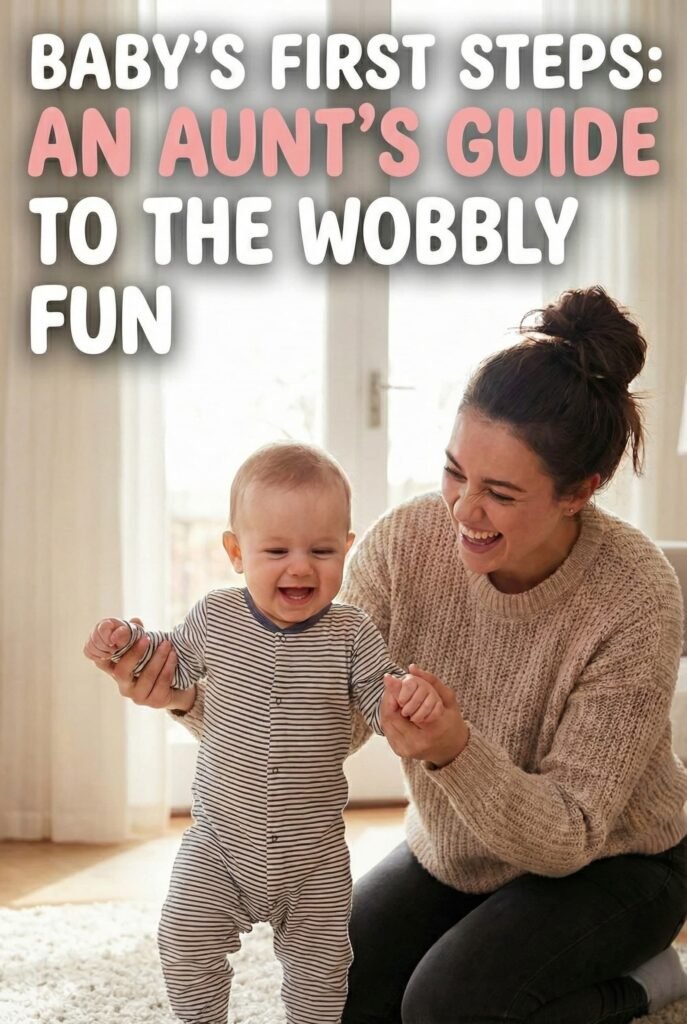
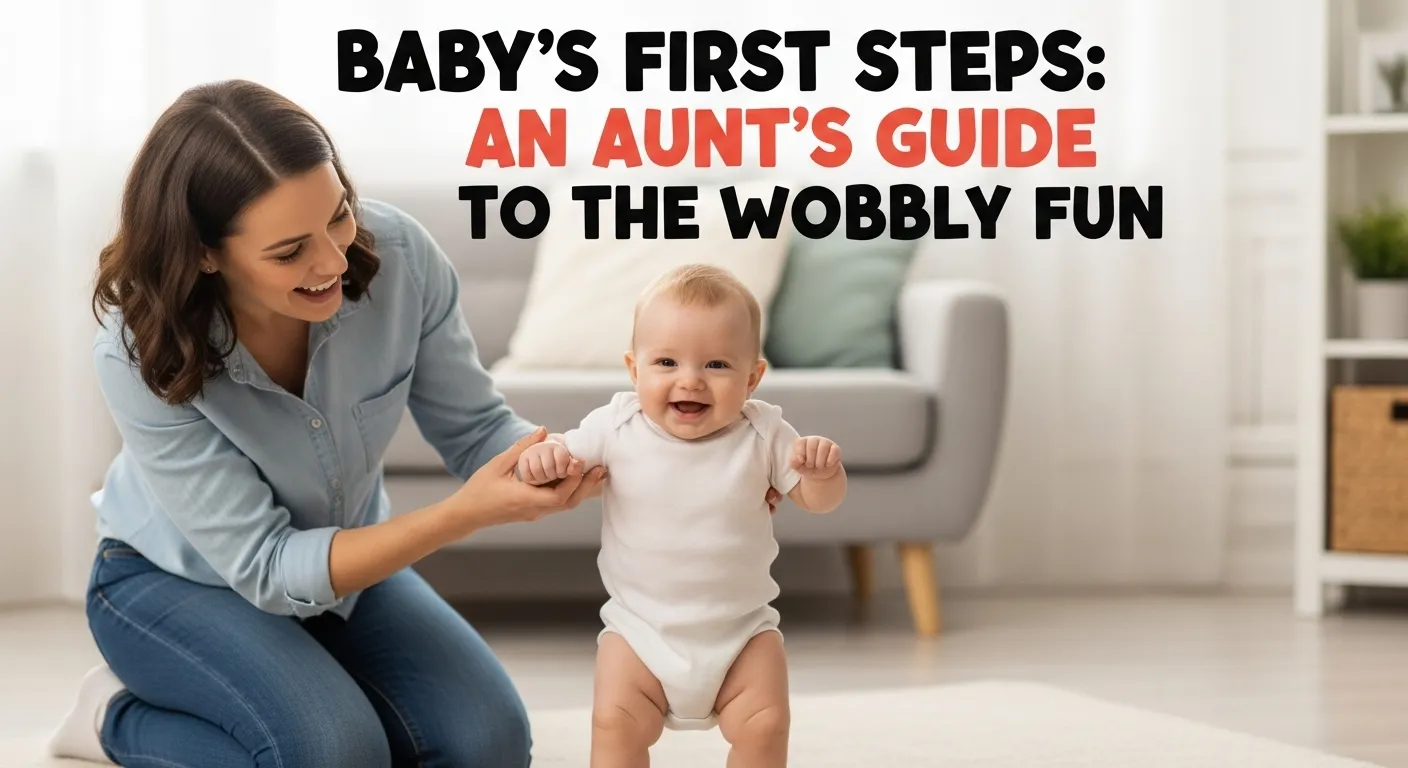
This is one of the most exciting milestones to watch, but it requires a specific strategy. Welcome to Baby’s First Steps: An Aunt’s Guide to the Wobbly Fun. Your job during this adventurous phase is to be a safe spotter, a gentle encourager, and the biggest cheerleader for their brave attempts.
What Happens Between 10 and 12 Months
The biggest change right now is a huge leap in their coordination and lower body strength. A baby is learning how to pull themselves to a standing position, how to balance on their own two feet, and how to coordinate the incredibly complex motion of taking a single step.
This stage is all about building the strength and confidence they need to leave crawling behind (a skill we covered in Welcome to the Floor: The Smart Aunt’s Secrets to Crawling). The progression from crawling to walking is a gradual and amazing process. In my book, Auntie of the Year, I summarize this incredible transition:
“Balance improves. They may stand or take their first steps.”
This simple sentence covers a series of amazing mini-milestones. First comes pulling up on furniture. Then, they will start “cruising” by shuffling sideways while holding on. Soon after, they might be able to stand unsupported for a few seconds. All of this practice leads to that magical moment of their first wobbly, wonderful steps.
4 Ways to Help Them Find Their Feet
The best way to help is to create a safe practice environment and to offer gentle, stable support. Your main goal is to build their confidence and let them learn at their own pace, not to rush them.
Here are four supportive techniques to try:
- Encourage Lots of Cruising: You can help by arranging sturdy furniture to create a little pathway for them to cruise along. This is their personal practice runway for walking, and it is a great way for them to build leg strength.
- Be Their Safe Landing Spot: Sit on the floor a few feet away from the sofa and encourage them to walk the short distance into your open arms. Knowing you are there as a soft and loving target gives them the confidence to let go.
- Hold Their Torso, Not Their Hands: When you help them practice, it is best to hold them gently around their chest or torso for support. Holding their hands stretched up high can throw off their natural sense of balance.
- Allow for Barefoot Time: Whenever it is safe and warm enough, let the baby practice walking barefoot. As the American Academy of Pediatrics recommends, barefoot walking allows them to use the small muscles in their feet to grip and balance more effectively.
Why Your Cheering Matters
Your reaction solidifies your role as their biggest fan. Your positive reinforcement and joyful celebration of their efforts teach them that trying new, hard things is a fun and rewarding experience.
Think about it from the baby’s perspective. They take a brave, wobbly step, and then look to you for a reaction. When they see your delighted face and hear your happy cheers, it gives them a huge boost of confidence. You become more than just a person who comforts them when they are sad; you are now the person who celebrates their greatest triumphs.
Frequently Asked Questions
My 12-month-old nephew is not walking yet. Should I be concerned?
Not at all. The normal range for walking is very wide, typically anywhere between 9 and 18 months. As long as he is learning to bear weight on his legs and is progressing through other motor skills like crawling and pulling himself up, he is on the right track.
Are baby shoes necessary for a new walker?
Indoors, barefoot is best for learning how to walk. For walking outdoors, you will want a shoe that is lightweight and flexible with a non-slip sole. The goal of a first shoe is just to protect their feet, not to provide rigid support which can actually hinder their natural foot development.
What do I do when they fall? It is so scary!
Try to stay calm. Babies are built to be resilient, and they will fall a lot as they learn to walk. If you gasp or rush over in a panic for every little tumble, you can make them more fearful. If they are not actually hurt, just offer a quick and cheerful “Oopsie-daisy! Up you go!” and a reassuring smile. This teaches them that falling is just a normal part of learning.