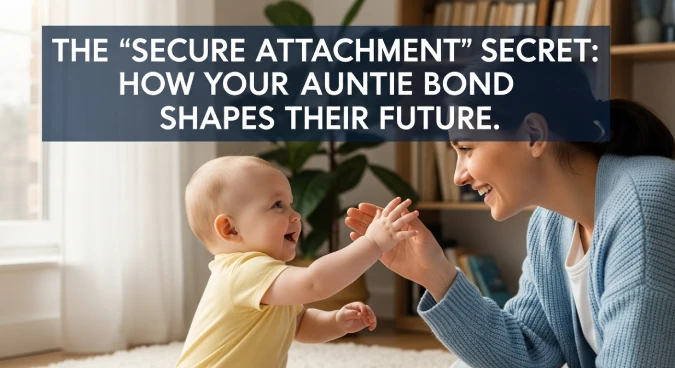
As an aunt, you know that special, unshakeable bond you feel with your niece or nephew is real. But did you know you are playing a critical role in their psychological development? You might not realize just how powerful the aunt’s role in secure attachment truly is.
You are building more than just a sweet feeling; you are a key part of their “secure attachment,” which is a child’s foundational blueprint for how they will trust, connect, and form relationships for the rest of their entire life.
In this post, we will explore what secure attachment really is, why your unique role is so formative, and how the simple, loving things you are already doing are having a lifelong impact.
What is “Secure Attachment”? (And Why It Matters)
“Secure attachment” is a term from child psychology. It refers to the deep, trusting bond a baby forms with their primary caregivers. It is an internal feeling of safety that teaches a child: “I am safe, I am loved, and my needs will be met.” This feeling becomes their “home base” for exploring the world.
Child development experts agree that a baby’s first relationships are the model for all their future ones. A child with a secure attachment learns that relationships are a source of comfort and joy. This makes them more likely to be confident, resilient, and empathetic as they grow up. They are more comfortable exploring new things because they know they have a safe, loving person to return to.
The Aunt’s Unique Role: Expanding the “Safe Zone”
The aunt’s role in secure attachment is to be one of the first people to expand that “safe zone.” You are their first, real-world proof that they can trust and love someone deeply besides their parents. Technically, you are a secondary attachment figure, which is vital for their social health.
This is a crucial step in their social and emotional development. When you show up consistently with love and warmth, you are teaching them a profound lesson: “The world is full of safe, loving people.” In my book, Auntie of the Year, I explain the power of this specific role:
“You help them develop secure attachment, which influences how they feel about relationships for life.”
That single sentence is the core of your power. You are not a “backup” parent; you are a foundational pillar of their emotional world. You are helping to wire their brain for trust, which will serve them as they build friendships, find partners, and even parent their own children someday.
3 Ways Your Aunt Bond is Building Their Future
You are likely already doing the most important work without even realizing it. A secure attachment with your niece or nephew is not built through grand gestures; it is built through small, consistent, everyday interactions.
Here are three key ways your unique aunt bond contributes to their lifelong skills:
- You Are a Model for “Other” Relationships: By being a consistent, loving, non-parent, you are the first model for their future friendships. You teach them how to trust and interact with a caring adult who is not their mom or dad, building their social confidence.
- You Are an “Emotional Safety Valve”: An aunt can often be a low-pressure confidante, teaching them it is safe to express feelings that they might be scared to show a parent. This builds their emotional regulation skills for life.
- You Are a Second Source of Stability: You are one more anchor. If the child’s home life ever gets stressful, a secure bond with an aunt acts as a powerful buffer, building their resilience. This is why, as we discussed in Why a 20-Minute Visit is Better Than a 3-Hour Stay (An Aunt’s Guide to Bonding), your consistent presence is so powerful.
Want to understand the science of attachment? Read more about how these bonds form at The AAP Parenting Website.
Frequently Asked Questions
Is building a secure attachment the same as “spoiling” a baby?
Not at all. You cannot spoil a baby with love, comfort, or a quick response to their needs. Spoiling is related to a lack of boundaries later in childhood. In infancy, responding to their cries and giving them affection builds trust and security, not a bad habit.
How does this “aunt role in secure attachment” differ from a parent’s?
A parent’s role is to provide the primary, 24/7 foundation of security. Your role as an aunt is to expand and reinforce that foundation. You are the first person to prove that the “safe world” exists outside of their parents, which is a vital lesson for their social development.
What if I live far away? Can I still build a secure attachment as an aunt?
Yes, you absolutely can. Secure attachment is built on consistent, loving interaction. Schedule regular video calls. Be an engaged, smiling face on the screen. Send small, personal gifts or letters. Your niece or nephew will learn to associate your voice and face with joy and love, building a strong, secure bond across the miles.